

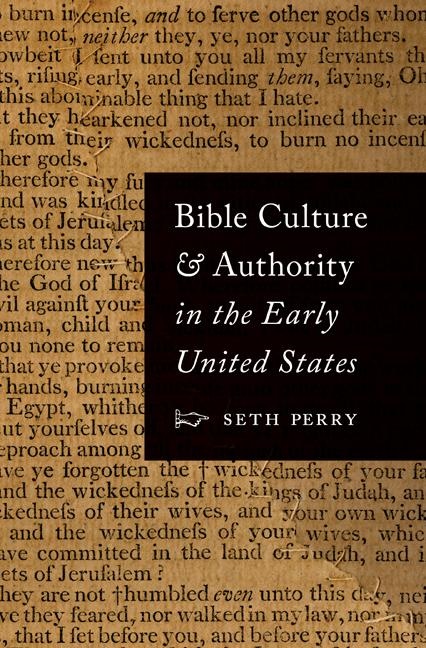
Bible culture and authority in the early united states English 2018
66.30 $

Share
Wishlist
ISBN:
9780691179131
Publisher:
Princeton University Press
Pages:
216
Weight:
484 g
Dimensions:
18 x 25 x 2 cm
Book Cover:
Hard Cover
Thema:
- Religion and beliefs
Early Americans claimed that they looked to "the Bible alone" for authority, but the Bible was never, ever alone. Bible Culture and Authority in the Early United States is a wide-ranging exploration of the place of the Christian Bible in America in the decades after the Revolution. Attending to both theoretical concerns about the nature of scriptures and to the precise historical circumstances of a formative period in American history, Seth Perry argues that the Bible was not a "source" of authority in early America, as is often said, but rather a site of authority: a cultural space for editors, commentators, publishers, preachers, and readers to cultivate authoritative relationships.
While paying careful attention to early national bibles as material objects, Perry shows that "the Bible" is both a text and a set of relationships sustained by a universe of cultural practices and assumptions. Moreover, he demonstrates that Bible culture underwent rapid and fundamental changes in the early nineteenth century as a result of developments in technology, politics, and religious life. At the heart of the book are typical Bible readers, otherwise unknown today, and better-known figures such as Zilpha Elaw, Joseph Smith, Denmark Vesey, and Ellen White, a group that includes men and women, enslaved and free, Baptists, Catholics, Episcopalians, Methodists, Mormons, Presbyterians, and Quakers. What they shared were practices of biblical citation in writing, speech, and the performance of their daily lives. While such citation contributed to the Bible's authority, it also meant that the meaning of the Bible constantly evolved as Americans applied it to new circumstances and identities.
more
more