

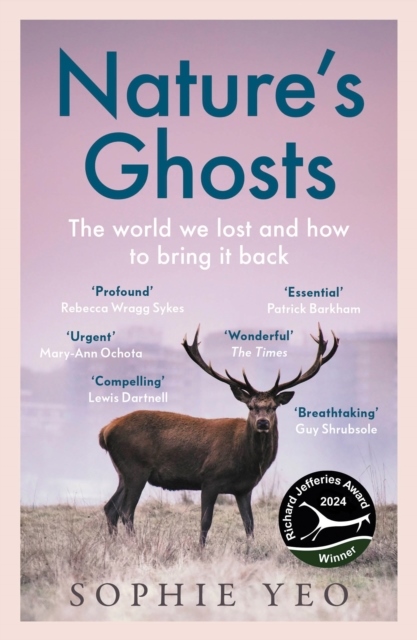
Nature's Ghosts English 2025
16.50 $

Share
Wishlist
ISBN:
9780008474157
Publisher:
Harper Collins UK
Pages:
320
Weight:
270 g
Dimensions:
13 x 20 x 2 cm
Book Cover:
Paperback
Thema:
- The environment
Shortlisted for the 2024 Wainwright Prize for Writing on Conservation
'Sophie writes fantastically, chronicling the most important issues facing nature conservationists today.' Chris Packham
For thousands of years, humans have been the architects of the natural world. Our activities have permanently altered the environment - for good and for bad.
In Nature's Ghosts, award-winning journalist Sophie Yeo examines how the planet would have looked before humans scrubbed away its diversity: from landscapes carved out by megafauna to the primeval forests that emerged following the last Ice Age, and from the eagle-haunted skies of the Dark Ages to the flower-decked farms of more recent centuries.
Uncovering the stories of the people who have helped to shape the landscape, she seeks out their footprints even where it seems there are none to be found. And she explores the timeworn knowledge that can help to fix our broken relationship with the earth.
Along the way, Sophie encounters the environmental detectives - archaeological, cultural and ecological - reconstructing, in stunning detail, the landscapes we have lost.
Today, the natural world is more vulnerable than ever; the footprints of humanity heavier than they have ever been. But, as this urgent book argues, from the ghosts of the past, we may learn how to build a more wild and ancient future.
more
more