

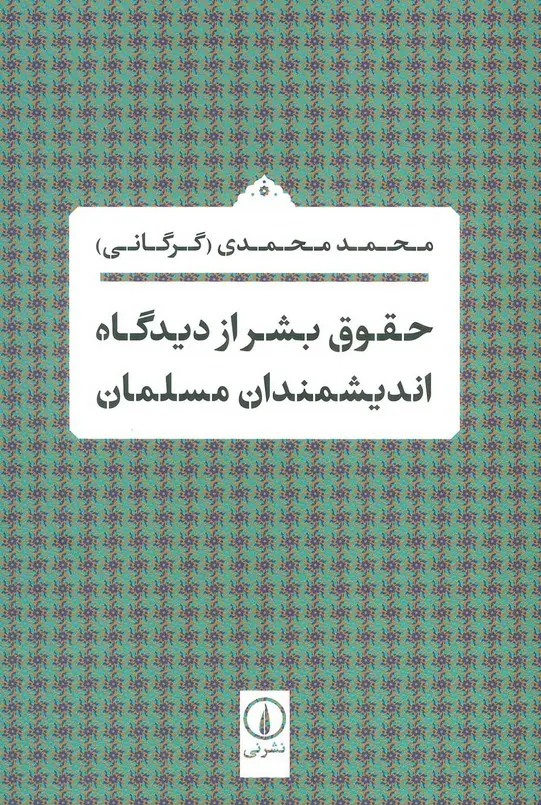
حقوق بشر از دیدگاه اندیشمندان مسلمان فارسی 1402
Ḥuqūq-i bashar az dīdgāh-i andīshmandān-i Musalmān
14٫88 $

اشتراکگذاری
Wishlist
عنوان اصلی:
حقوق بشر از دیدگاه اندیشمندان مسلمان
شابک:
9786220604860
ناشر:
Nashr-i niy
گروه سنی:
بزرگسال
صفحات:
332
وزن:
400 g
ابعاد:
14 x 21 x 2 cm
جلد کتاب:
شومیز
Human Rights from the Perspective of Muslim Thinkers by Mohammad Mohammadi Gorgani, a distinguished scholar of law, examines two major global issues: the principles and interpretation of the Universal Declaration of Human Rights, and the diverse responses of Muslim intellectuals to this foundational international document. Drawing on decades of teaching and research, the author seeks to establish a meaningful dialogue between the modern concept of human rights and the intellectual traditions of Islamic thought.
The book begins by asking why human rights were formulated in the first place. Its answer centers on the struggle against discrimination in all its forms. From racial supremacy and religious intolerance to ethnic and gender-based prejudice, the author argues that such injustices stem from the denial of a fundamental principle: that every human being possesses rights simply by virtue of being human. The work also addresses common misconceptions regarding the relationship between religious belief and human rights, distinguishing between the truth claims of a belief system and the equal rights of individuals to hold differing beliefs.
In the first part of the book, Mohammadi Gorgani explores the philosophical foundations of the Universal Declaration of Human Rights. He argues that principles such as human dignity and equality are universal values shared across civilizations, while noting that rights and freedoms, including freedom of expression, are often exercised within legal, ethical, and social frameworks. He also responds to criticisms that view human rights as exclusively Western concepts or as instruments of political power, emphasizing that the misuse of an idea does not invalidate its underlying value.
The second part examines a range of Muslim perspectives on human rights. Rather than presenting a single “Islamic” position, the author categorizes Muslim thinkers into several intellectual currents, from traditionalist and reformist approaches to more contemporary and human-centered interpretations. He highlights debates concerning the relationship between religious law, collective reason, social justice, and universal rights, illustrating the diversity of thought within the modern Muslim world.
Combining legal analysis, philosophical reflection, and intellectual history, Human Rights from the Perspective of Muslim Thinkers is a valuable resource for students and scholars of law, political science, Islamic studies, and human rights. It offers a thoughtful exploration of the challenges and possibilities involved in reconciling universal human rights principles with religious and cultural traditions in the contemporary world.
more
کتاب «حقوق بشر از دیدگاه اندیشمندان مسلمان» نوشته دکتر محمد محمدیگرگانی، پژوهشی جامع و تحلیلی در زمینه حقوق بشر و نسبت آن با اندیشه اسلامی است. نویسنده با تکیه بر سالها تدریس و پژوهش، ضمن بررسی مبانی و مفاد اعلامیه جهانی حقوق بشر، دیدگاههای متنوع متفکران مسلمان درباره مفاهیمی چون کرامت انسانی، برابری، آزادی، عدالت و حقوق شهروندی را واکاوی میکند.
این اثر با نگاهی علمی و مستند، اندیشمندان مسلمان را بر اساس رویکردشان به حقوق بشر در چهار جریان فکری دستهبندی کرده و نقاط اشتراک و اختلاف آنان را بهروشنی نشان میدهد. کتاب همچنین به موضوعاتی مانند تبعیض، آزادی عقیده، رابطه دین و حقوق، نقش خرد جمعی در قانونگذاری و چالشهای تحقق حقوق بشر در جوامع معاصر میپردازد.
«حقوق بشر از دیدگاه اندیشمندان مسلمان» منبعی ارزشمند برای دانشجویان، پژوهشگران و علاقهمندان حوزههای حقوق، علوم سیاسی، مطالعات اسلامی و فلسفه است و چشماندازی عمیق برای فهم گفتوگوی میان سنت فکری اسلامی و مفاهیم جهانی حقوق بشر ارایه میدهد.
more