

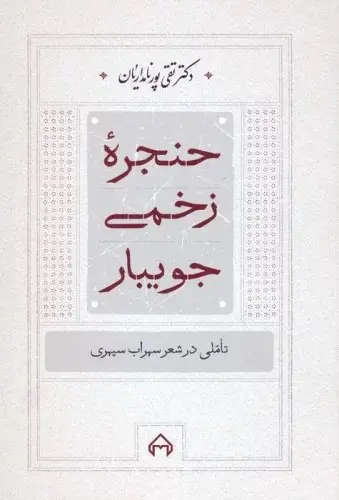
Ḥanjarah-yi zakhmī-yi jūybār: Taʼammulī dar shiʻr-i Suhrāb Sipihrī Persiska (Farsi) 2024
حنجره زخمی جویبار: تأملی در شعر سهراب سپهری
36,97 $

Dela
Wishlist
The Wounded Throat of the Stream: Reflections on the Poetry of Sohrab Sepehri, by Taqi Pournamdarian, is a critical study of the poetry of Sohrab Sepehri and his place in modern Persian literature. The book examines the stylistic, linguistic, and thematic characteristics of Sepehri’s poetry and explores the ways in which his poetic world differs from many of the dominant currents in contemporary Persian verse.
Pournamdarian approaches Sepehri’s work through themes such as nature, simplicity, spirituality, modern humanity, and the loss of inner purity. He argues that, in contrast to the increasingly industrial and technological character of modern life, Sepehri’s poetry repeatedly turns toward nature, childhood, silence, contemplation, and a more immediate experience of existence.
Alongside its thematic analysis, the book also considers Sepehri’s poetic structure and distinctive modes of expression, offering a more detailed understanding of one of the major individual voices in twentieth-century Persian poetry. The inclusion of a bibliography and index further enhances the book’s value for students, scholars, and readers interested in the criticism of modern Persian poetry.
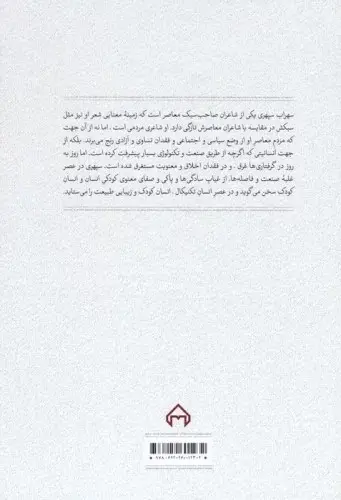
The book’s back-cover text emphasizes Sepehri’s distinctive position among contemporary poets. It presents him as a poet deeply concerned with humanity, not primarily through political or social protest, but through his response to a modern world shaped by technological progress, spiritual decline, and increasing distance from simplicity and moral clarity. In this context, Sepehri’s poetry celebrates childhood, innocence, nature, and spiritual purity as counterpoints to the pressures of modern technological life.
more
«حنجره زخمی جویبار: تأملی در شعر سهراب سپهری» نوشته تقی پورنامداریان، پژوهشی در نقد و تفسیر شعر سهراب سپهری و بررسی جایگاه او در شعر معاصر فارسی است. نویسنده در این کتاب به ویژگیهای سبکی، زبانی و معنایی شعر سپهری میپردازد و میکوشد نشان دهد که جهان شعری او چگونه از بسیاری از جریانهای رایج شعر معاصر فاصله میگیرد.
در این اثر، شعر سپهری از منظر مفاهیمی چون طبیعت، سادگی، معنویت، انسان معاصر و فاصله گرفتن او از پاکی و صفای درونی بررسی میشود. پورنامداریان نشان میدهد که سپهری، در برابر جهان صنعتی و تکنیکی، بر نوعی بازگشت به طبیعت، کودکی، سکوت، تأمل و تجربه بیواسطه زندگی تأکید دارد.
کتاب علاوه بر تحلیل مضامین شعر سپهری، به ساختار و شیوه بیان او نیز توجه دارد و از این رهگذر تصویری دقیقتر از یکی از مهمترین شاعران صاحبسبک قرن چهاردهم هجری ارایه میدهد. وجود کتابنامه و نمایه نیز این اثر را برای دانشجویان، پژوهشگران و علاقهمندان به نقد شعر معاصر فارسی به منبعی کاربردی تبدیل کرده است.
متن پشت جلد:
سهراب سپهری یکی از شاعران صاحب سبک معاصر است که زمینهٔ معنایی شعر او نیز مثل سبکش در مقایسه با شاعران معاصرش تازگی دارد. او شاعری مردمی است، اما نه از آن جهت که مردم معاصر او از وضع سیاسی و اجتماعی و فقدان تساوی و آزادی رنج میبرند، بلکه از جهت انسانیتی که اگرچه از طریق صنعت و تکنولوژی بسیار پیشرفت کرده است، اما روز به روز در گرفتاریهای غرق، و در فقدان اخلاق و معنویت مستغرق شده است. سپهری در عصر غلبهٔ صنعت و فاصلهها، از غیاب سادگیها و پاکی و صفای معنوی کودکی انسان و انسان کودک سخن میگوید و در عصر انسان تکنیکال، انسان کودک و زیبایی طبیعت را میستاید.
more