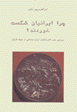


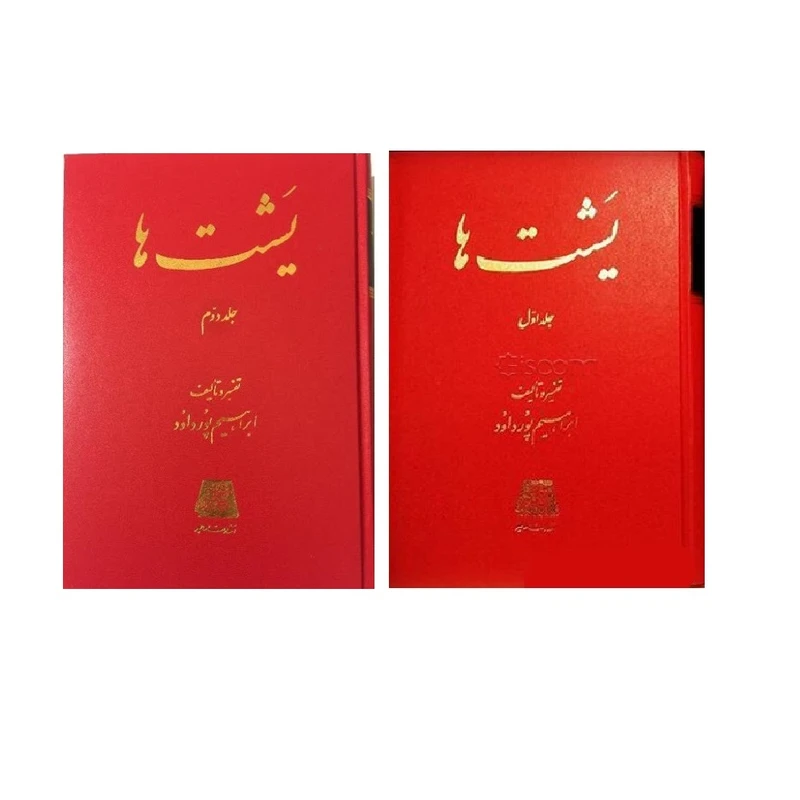
yasht,ha Persiska (Farsi) 1998
یشت ها
För närvarande inte tillgänglig

Dela
Wishlist
“The Yashts”, translated and researched by Ebrahim Pourdavoud, is one of the important works for the study of the Avesta, Zoroastrian tradition, and the culture and mythology of ancient Iran. The Yashts are a section of the Avesta, the sacred scripture of Zoroastrianism, and consist of a collection of hymns and prayers primarily dedicated to the praise of divine beings and spiritual forces, including Mithra, Anahita, and Tishtrya.
The word “Yasht” is related to “Yasna” and means praise and worship. In the Middle Persian (Pahlavi) language, yashtan also carries the meaning of praising and worshiping. The Yashts of the Avesta are not uniform in terms of age or structure; each reflects aspects of the religious beliefs, myths, and worldview of ancient Iranians. In manuscript traditions, the longer Yashts are divided into sections known as “Kardeh”, while the modern division into numbered verses is a system developed by modern scholars to facilitate study and citation.
The two-volume collection “The Yashts”, translated and researched by Pourdavoud, provides not only translations of these Avestan texts but also serves as a valuable source for understanding Zoroastrianism, Iranian mythology, Zoroastrian deities, and the cultural heritage of ancient Iran.
more
«یشتها» با ترجمه و پژوهش ابراهیم پورداوود، از آثار مهم در زمینه شناخت اوستا، آیین زرتشتی و فرهنگ و اساطیر ایران باستان است. یشتها بخشی از اوستا، کتاب دینی زرتشتیان، هستند و مجموعهای از سرودها و نیایشهایی را دربر میگیرند که عمدتاً در ستایش ایزدان و نیروهای مینوی، از جمله مهر، ناهید و تیشتر، سروده شدهاند.
واژه «یشت» با «یسن» همریشه و به معنای ستایش و نیایش است و در زبان پهلوی نیز «یشتن» معنای ستودن و عبادت کردن دارد. یشتهای اوستا از نظر قدمت و ساختار یکسان نیستند و هر یک بازتابدهنده بخشی از باورهای دینی، اسطورهها و جهانبینی ایرانیان باستاناند. یشتهای بزرگ در نسخههای خطی به بخشهایی موسوم به «کرده» تقسیم شدهاند، در حالی که تقسیم امروزی آنها به بندها، شیوهای است که پژوهشگران جدید برای سهولت مطالعه و ارجاع به متن به کار گرفتهاند.
مجموعه دو جلدی «یشتها» با ترجمه و پژوهش پورداوود، افزون بر ارایه این متون اوستایی، منبعی ارزشمند برای آشنایی با دین مزدیسنا، اساطیر ایرانی، ایزدان زرتشتی و میراث فرهنگی ایران باستان به شمار میآید.
more