

Jādah-yi jang Persiska (Farsi) 2019
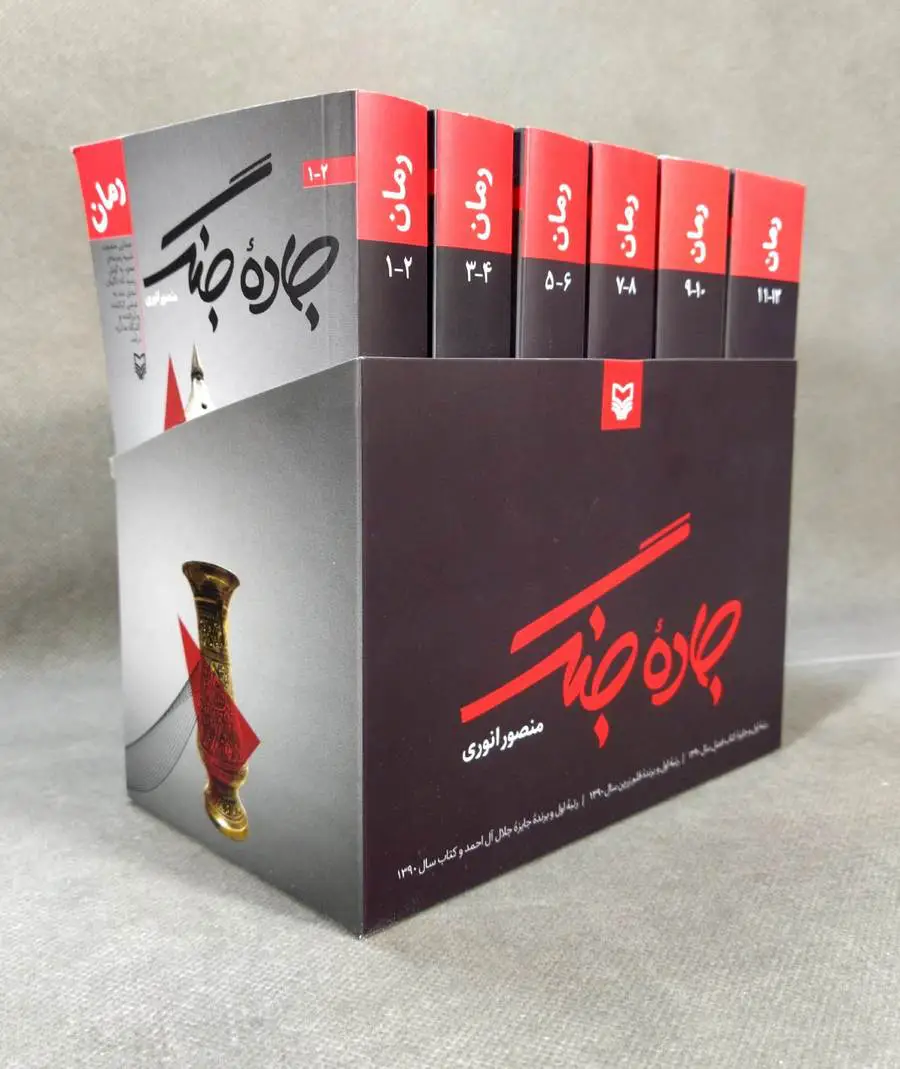
جاده جنگ
114,78 $

Dela
Wishlist
Originaltitel:
جاده جنگ
ISBN:
9789645066497
Förlag:
Surih-yi Mihr
Antal volymer:
12
Åldersgrupp:
Vuxen
Sidor:
4730
Vikt:
2840 g
Produktmått:
14 x 21 x 20 cm
Bokomslag:
Pocketbok
“The Road of War” by Mansour Anvari is a historical epic novel in twelve volumes that narrates several decades of contemporary Iranian history through a fictional narrative. The story begins with the Anglo-Soviet invasion of Iran on 23 August 1941 during World War II and follows the political and social transformations of the following decades, extending to the Islamic Revolution of 1979 and the Iran–Iraq War.
A major part of the narrative centers on the character of Seyyed Reza Sharifi, a conscript serving in the Iranian gendarmerie. Through his life and the experiences of other characters, the author incorporates historical events such as the Allied occupation of Iran, the political developments of the 1950s and 1960s, the 15 Khordad uprising, the activities of political groups, the 1979 Revolution, the events in Iranian Kurdistan, and finally the Iran–Iraq War. Many events in the novel are based on historical occurrences, field research, and oral accounts. In this sense, “The Road of War” can be considered a fictionalized narrative of nearly half a century of contemporary Iranian history.
Roads, particularly routes connected to Shahroud, hold a central place in the structure of the novel and become symbolic elements linking different historical periods and reflecting the continuity of conflict and instability. In writing this series, Anvari attempts to intertwine the destinies of fictional characters with real historical events and to portray the impact of major political and military transformations on the lives of ordinary people.
The writing of this extensive series took more than a decade, and “The Road of War” has received several literary awards, including the Jalal Al-e Ahmad Literary Award, the Book of the Year Award of the Islamic Republic of Iran, the Golden Pen Award, and the Book of the Season Award.
Mansour Anvari is an Iranian writer whose literary career has largely focused on novels and stories dealing with contemporary history, the Iranian Revolution, and the Iran–Iraq War. “The Road of War” is regarded as one of his most extensive and recognized works in the field of historical fiction.
more
«جاده جنگ» اثر منصور انوری، رمانی تاریخی و بلند در دوازده مجلد است که رویدادهای چند دهه از تاریخ معاصر ایران را در قالب داستان روایت میکند. ماجرا از سوم شهریور 1320 و اشغال ایران در جنگ جهانی دوم آغاز میشود و با عبور از تحولات سیاسی و اجتماعی دهههای بعد، تا انقلاب اسلامی و جنگ ایران و عراق ادامه پیدا میکند. بخش مهمی از روایت حول شخصیت سیدرضا شریفی، سرباز وظیفه ژاندارمری، شکل میگیرد. نویسنده از خلال زندگی او و دیگر شخصیتها، وقایعی چون حضور متفقین در ایران، تحولات سیاسی دهههای 1330 و 1340، واقعه 15 خرداد، فعالیت گروههای سیاسی، انقلاب سال 1357، حوادث کردستان و سرانجام جنگ ایران و عراق را وارد داستان میکند. بسیاری از حوادث اثر بر پایه رویدادهای تاریخی، تحقیقات میدانی و روایتهای شفاهی شکل گرفتهاند و از این منظر میتوان «جاده جنگ» را نوعی روایت داستانی از نزدیک به نیم قرن تاریخ معاصر ایران دانست. جادهها، بهویژه مسیرهای مرتبط با شاهرود، در ساختار رمان جایگاهی محوری دارند و به عنصری نمادین برای پیوند دورههای مختلف تاریخی و تداوم جنگ و ناآرامی تبدیل میشوند. انوری در نگارش این مجموعه کوشیده است سرنوشت شخصیتهای داستانی را با وقایع واقعی تاریخی درآمیزد و تأثیر تحولات بزرگ سیاسی و نظامی را بر زندگی مردم عادی نشان دهد. نگارش این مجموعه بیش از یک دهه به طول انجامیده و «جاده جنگ» موفق به دریافت چندین جایزه ادبی، از جمله جایزه ادبی جلال آلاحمد، کتاب سال جمهوری اسلامی ایران، قلم زرین و کتاب فصل شده است. منصور انوری نویسنده ایرانی است که بخش مهمی از فعالیت ادبی خود را به داستانها و رمانهایی با موضوع تاریخ معاصر، انقلاب و جنگ ایران و عراق اختصاص داده است. «جاده جنگ» از گستردهترین و شناختهشدهترین آثار او در حوزه رمان تاریخی به شمار میآید.
more