

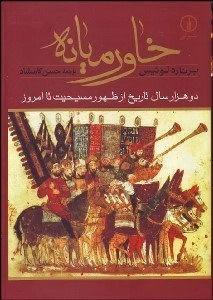
خاورمیانه: دو هزار سال تاریخ از ظهور مسیحیت تا امروز الفارسية 1447
Khāvar-e Miyānehdo hezār sāl tārīkh az ẓohūr-e Masīḥīyat tā emrūz
6٫83 $

مشاركة
Wishlist
العنوان الأصلي:
خاورمیانه: دو هزار سال تاریخ از ظهور مسیحیت تا امروز
ISBN رقم:
9789643126476
المترجم:
Ḥassan Kāmshād
الناشر:
Nashr-i niy
الفئة العمرية:
البالغون
الصفحات:
446
الوزن:
636 g
أبعاد المنتج:
17 x 24 x 2٫5 cm
غلاف الكتاب:
غلاف ورقی
The Middle East is not only the birthplace of three major religions and numerous civilizations, but for many centuries it has also been a center of knowledge and thought, technologies and products, and at times a major military and political hub. In this book, Professor Bernard Lewis, the British Orientalist, examines the successive transformations of the Middle East from two thousand years ago to the present day.
He begins by providing background on the two great empires of Iran and Rome, then goes on to discuss the emergence of monotheism and the growth of Christianity, the rise and expansion of Islam, waves of invaders from the East and the Mongol armies of Genghis Khan, the rise of the Ottoman Turks, and the shifting balance of power between the Islamic world and Christendom. He also analyzes the forces that shaped the Middle East and considers the pervasive influence of Western ideas and technology in the modern era, concluding the book with the Islamic Revolution in Iran.
First published in 1995, the book is divided into five parts and nineteen chapters. The first part, the Introduction, offers a brief overview of the subject and a concise survey of Middle Eastern transformations. The second part examines the Middle East before Christianity and before Islam in two chapters. The third part, dealing with the rise and peak of Islam, comprises chapters three through seven: Foundations, The Abbasid Caliphate, The Invasions of the Nomadic Peoples, After the Mongols, and The Gunpowder Empires.
The fourth part, titled Segments, focuses on several major historical themes in the Middle East and includes chapters eight through thirteen: The State, The Economy, The Elites, The Masses, Religion and Law, and Culture. The final part discusses developments in the modern Middle East, particularly its confrontation with modernity, in the chapters Challenge, Transformation, Response and Reaction, New Ideas, From the First World War to the Second World War, and From Freedom to Freedom (the Middle East from the end of the Second World War to the present).
The book is illustrated with numerous photographs and maps and concludes with the author’s notes, a bibliography, a chronological table of major events, several maps, and an index of names.
more
خاور میانه نه تنها زادگاه سه دین و تمدنهای متعدد، بلکه قرنهای زیادی کانون دانش و اندیشهها، فنون و محصولات و نیز گهگاه مرکز نظامی و سیاسی بوده است .در کتاب حاضر، پرفسور "برنارد لوییس " مستشرق انگلیسی دگرگونیهای متوالی خاورمیانه را از دو هزار سال پیش تا امروز بررسی کرده است .وی ابتدا اطلاعاتی درباره دو امپراتوری بزرگ ایران و روم به دست میدهد ; سپس پیدایش یکتا پرستی و رشد مسیحیت، ظهور و گسترش اسلام، امواج مهاجمان مشرق زمین و لشگرهای مغول چنگیزخان، بر آمدن ترکان عثمانی و تغییر موازنه قوانین جهان اسلام و جهان مسیحیت بحث و بررسی میکند .او همچنین، ضمن تشریح نیروهای شکل دهنده خاور میانه، به نفوذ فراگیر اندیشهها و تکنولوژی غرب در عصر جدید نیز مینگرد و کتاب خود را با انقلاب اسلامی ایران به پایان میرساند .کتاب که در سال 1995منتشر شده، از پنج بخش و نوزده فصل تشکیل شده است .بخش نخست یا "مقدمه "گزارش کوتاهی است از موضوع کتاب که طی آن نویسنده نگاهی گذرا بر تحولات خاورمیانه میافکند .در بخش دوم، خاورمیانه پیش از مسیحیت و پیش از اسلام طی دو فصل بررسی میشود .بخش سوم درباره دوران طلوع و اوج اسلام شامل فصلهای سوم تا هفتم است :(یعنی" :مبانی"، "خلافت عباسیان"، "هجوم اقوام بیابانگرد"، "پس از مغولان "و "امپراتوری باروت .("در بخش چهارم با عنوان مقطعها، به چند مقوله مهم تاریخی در خاورمیانه توجه شده که مشتمل بر فصلهای هشتم تا سیزدهم است که عبارتاند از" :دولت"، "اقتصاد"، "خواص"، "عوام"، "دین و قانون " و "فرهنگ ."در آخرین بخش، تحولات دوران جدید خاورمیانه به ویژه در چالش با تجدد به بحث گذاشته شده که به ترتیب از این قرارند" :چالش"، "دگرگونی"، "پاسخ و واکنش"، "اندیشههای جدید"، "از جنگ جهانی اول تا جنگ جهانی دوم"، "از آزادی به آزادی "(خاور میانه پس از جنگ جهانی دوم تا امروز) .مطالب کتاب با عکسها و نقشههای متعدد همراه است و با یادداشتهای مولف، کتابشناسی، گاهشمار حوادث مهم، چند نقشه و نمایه اسامی به پایان میرسد .
more