

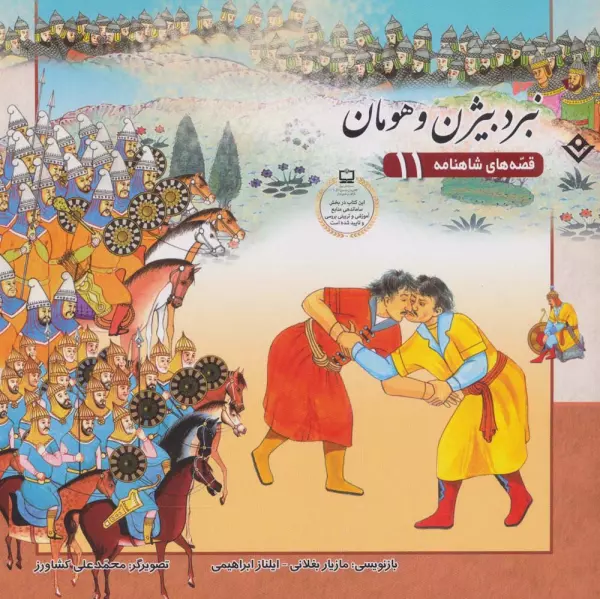
نبرد بیژن و هومان: قصههای شاهنامه 11 الفارسية 1447
Nabard-e Bīzhan o HūmānQesseh-hā-ye Shāhnāmeh 11
7٫35 $

مشاركة
Wishlist
العنوان الأصلي:
نبرد بیژن و هومان: قصههای شاهنامه 11
ISBN رقم:
9786003751712
رسام:
Moḥammad-‘Alī Keshāvarz
محول:
Māzyār Baghalānī
,
Īlnāz Ebrāhīmī
الناشر:
Barf
ReadingOrder:
11
الفئة العمرية:
أطفال الابتداییه - من 8 إلی 12 سنه
الصفحات:
12
الوزن:
150 g
أبعاد المنتج:
22 x 22 x 0٫5 cm
غلاف الكتاب:
غلاف ورقی
At dawn, Houmān donned his armor and set out to face Bizhan in battle. Bizhan, too, mounted his horse Shabahang in royal armor and rode boldly to meet him. To prevent either side from receiving help from their armies, the two warriors chose a remote, barren plain as their battlefield and pledged that whoever triumphed would allow the other’s interpreter to return safely.
The combat began—first with arrows, then with swords, maces, and finally hand-to-hand wrestling. From sunrise to sunset, in the heat of the battlefield, neither could overcome the other. After a brief pause to drink water, the fight resumed. At last fortune favored Bizhan: he hurled Houmān to the ground, drew his dagger, and severed his head, avenging Siyāvash and the seventy brothers of Giv.
Bizhan tied Houmān’s head to his saddle, but knowing he must pass before the Turanian army, he disguised himself in Houmān’s armor and standard. From afar, the Turanians believed their champion was returning victorious—until Houmān’s interpreter reached the camp and revealed the truth, plunging the army into grief.
Bizhan safely reached the Iranian ranks. The sentinels cried out in joy, and Giv embraced his son with tears. Gudarz, too, rejoiced and bestowed royal garments upon him.
In the Turanian camp, Pīrān mourned deeply for his two slain brothers—Houmān and Nastīhen. Nastīhen rose to avenge them and, with ten thousand horsemen, launched a night attack on the Iranian army. The Iranians prepared themselves, and Bizhan, with a thousand brave riders, met them in battle.
In the fierce clash that followed, Bizhan shot Nastīhen’s horse and then smashed his skull with a mighty blow of his mace. The Turanian troops broke and many were slain. When the survivors carried news of Nastīhen’s death to Pīrān, he collapsed in despair.
Seeing no choice but to continue the war, Pīrān arrayed his forces. Gudarz wrote to Kay Khosrow asking for reinforcements, and the king promised to dispatch a powerful army. Hoping to avoid a devastating battle, Pīrān sent a message offering to return all Iranian cities held by the Turanians without bloodshed. But Gudarz, long familiar with Pīrān’s evasions, refused: the king had ordered war, and peace was no longer an option.
Thus Pīrān appealed to Afrāsiyāb for help, and the Turanian king vowed to send reinforcements—setting the stage for a great and decisive confrontation between the two armies.
This story has been adapted into a modern, illustrated edition for children by Barf Publishing, with artwork by Mohammad-Ali Keshavarz and retelling by Maziar Baghlani and Ilnaz Ebrahimi.
more
سپیدهدم، هومان جامهٔ رزم پوشید و برای نبرد با بیژن راهی میدان شد. بیژن نیز با زره خسروی بر اسب شباهنگ نشست و شجاعانه به استقبال او رفت. آن دو، برای دور ماندن از یاری سپاهها، دشتی بیآبوعلف و دور از دسترس را بهعنوان میدان رزم برگزیدند و پیمان کردند که هرکس پیروز شد، ترجمان دیگری را آزادانه بازگرداند. جنگ آغاز شد؛ نخست با تیر، سپس با شمشیر، گرز و کشتی. از بام تا شام، در گرمای میدان، هیچکدام بر دیگری چیره نشدند. پس از استراحتی کوتاه برای نوشیدن آب، دوباره رزم را از سر گرفتند. سرانجام بخت با بیژن همراه شد. او هومان را بر زمین کوبید، خنجر کشید و سر از تنش جدا کرد؛ خونخواهی سیاوش و هفتاد برادر گیو را بهجای آورد. بیژن سر هومان را بر زین بست، اما چون باید از برابر سپاه توران میگذشت، برای فریب دشمن، زره و درفش هومان را بر تن و در دست گرفت. تورانیان از دور گمان کردند هومان پیروز بازمیگردد، اما با رسیدن ترجمان، حقیقت آشکار شد و سپاه در سوگ فرو رفت. بیژن در همان میان، خود را به سپاه ایران رساند. دیدهبانان شادی کردند. گیو، پدر بیژن، با شوق و اشک او را در آغوش گرفت. گودرز نیز از پیروزی او شادمان شد و خلعت شاهانهای به وی بخشید. در سپاه توران، پیران از غم مرگ دو برادرش—هومان و نستهین—به ماتم نشست. نستهین به خونخواهی برخاست و با ده هزار سوار نیمهشب بر سپاه ایران تاخت. ایرانیان آماده شدند و بیژن با هزار سوار دلیر در برابرشان ایستاد. در نبردی سخت، بیژن تیری به اسب نستهین زد و سپس با گرزی سنگین چنان بر سر او کوفت که همانجا جان سپرد. سپاه توران شکسته شد و بسیاری کشته شدند. فراریان خبر مرگ نستهین را به پیران رساندند و او از اندوه بیهوش بر زمین افتاد. پیران که چارهای جز ادامهٔ جنگ نمیدید، سپاه را آراست. گودرز نیز نامهای به کیخسرو نوشت و یاری خواست. خسرو وعده داد که با سپاهی نیرومند خواهد آمد. پیران برای جلوگیری از جنگی بزرگ پیام آشتی فرستاد و پیشنهاد کرد شهرهای ایران را بیدرگیری بازگردانند. اما گودرز که فریبکاری پیران را بارها آزموده بود، پاسخ داد که فرمان شاه جنگ است و صلح پذیرفتنی نیست. ناچار پیران از افراسیاب کمک خواست و او نیز وعدهٔ یاری داد تا نبردی سهمگین میان دو سپاه آغاز شود. این داستان در قالبی امروزی و تصویری برای کودکان توسط نشر برف، با تصویرگری محمدعلی کشاورز و بازنویسی مازیار بغلانی و ایلناز ابراهیمی منتشر شده است.
more