

너와 나의 공통점 الكورية 1447
Nŏwa Na-ŭi Gongtongjŏm
26٫46 $

مشاركة
Wishlist
العنوان الأصلي:
너와 나의 공통점
ISBN رقم:
9788936449001
رسام:
Mo Ye-jin
الناشر:
Changbi Publishers
الفئة العمرية:
الشباب - 12 الی 18 سنه
الصفحات:
144
الوزن:
417 g
أبعاد المنتج:
18 x 21 x 1٫5 cm
غلاف الكتاب:
غلاف کرتونی
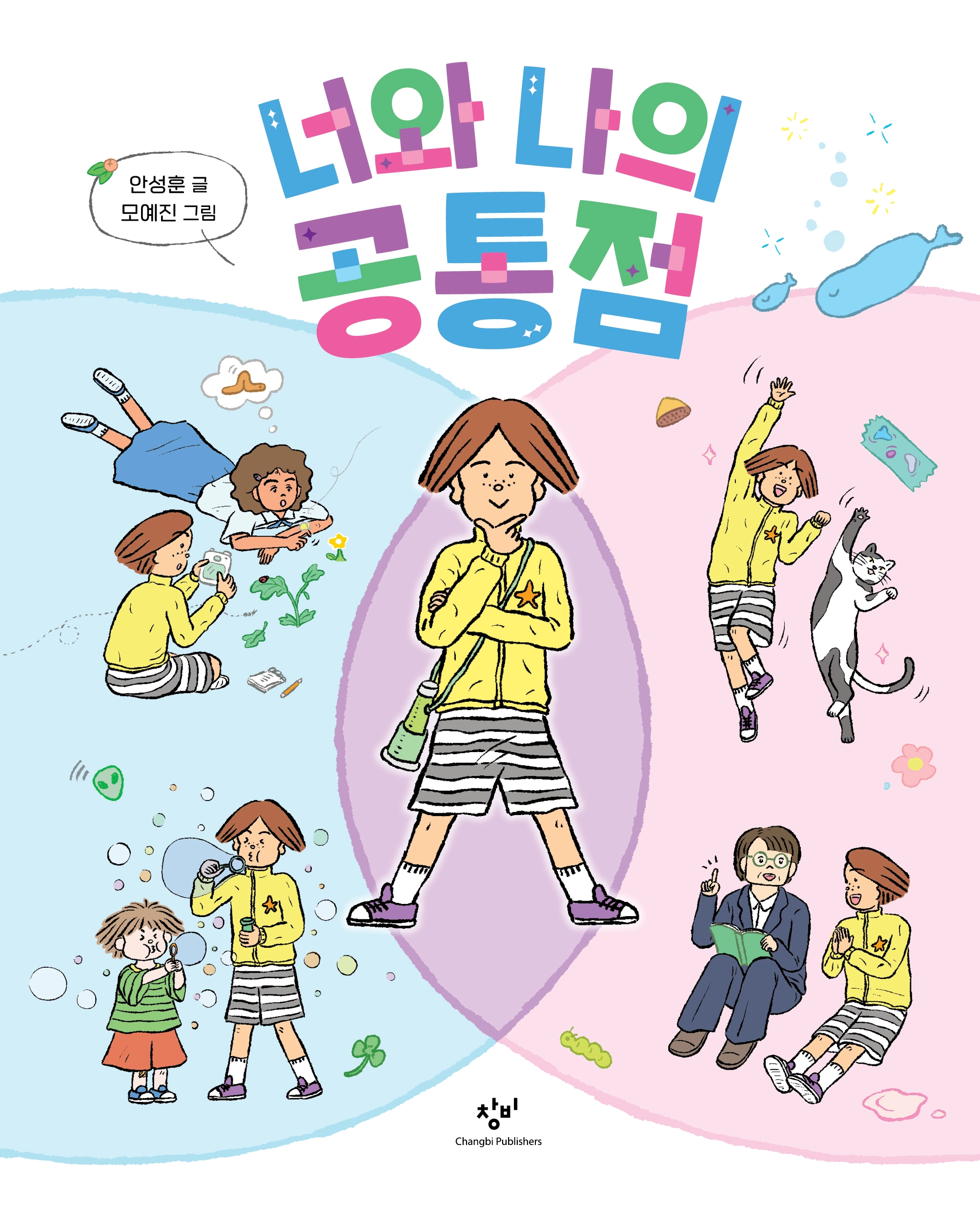
found it! What We Have in Common!" A guidebook for children seeking common ground that nurtures their hearts, "What We Have in Common" depicts a fifth-grade protagonist's journey as he observes the people around him and discovers similarities with himself. The moment he notices even the smallest similarities, the worlds of others and "myself" overlap, enabling him to form healthy relationships with everyone. The reason the protagonist greeted the dentist he once feared with a smile, and the secret to befriending a child from the other side of the world, all lie in "finding common ground." As young readers follow the protagonist's story of discovering commonalities with an open mind, they will learn a positive attitude and tolerance for building relationships with others. With author Ahn Sung-hoon's meticulously crafted text that captures the inquisitive mind of a child, and artist Mo Ye-jin's charming illustrations that beautifully depict the moments when diverse commonalities are discovered, this book is a delightful guide to expanding relationships. Can we, so different as we are, truly become friends? The power that connects us lies in our "common ground"! Can people with polar opposites in age, gender, place of residence, social status, tastes, and values become friends? Indeed, former US Supreme Court Justice Ruth Bader Ginsburg and former conservative Justice Antonin Scalia maintained a close, lifelong friendship despite their polar opposite political leanings. Their shared love of opera, their friendship, became so famous that it was even adapted into an opera, "Scalia/Ginsburg." Relationships become stronger when we focus on our similarities rather than our differences. "What We Have in Common" naturally unravels this message through a variety of episodes from children's daily lives, teaching them how to broaden their own worlds. The protagonist, Hyunseo, observes her family, neighbors, schoolmates, and teachers, as well as seemingly dissimilar people like a dentist, a district mayor, an idol singer, and even a peer from a different culture on the other side of the world, exploring their shared interests. We often develop preconceived notions based on only a fragmented view of others, but ultimately, through small commonalities, we bond with them, broadening and warming our worlds. Hyunseo's story, which highlights her positive perspective and attitude toward others, will convey the joy of discovering commonalities to children, fostering understanding and consideration for others, and teaching them how to build healthy relationships. The key to transforming conflict into understanding and differences into respect! "Finding Commonalities" fosters consideration and tolerance. Hyunseo not only finds commonalities with those close to her, such as family, friends, and neighbors, but also extends her interest to those with less readily apparent similarities, such as people from diverse professions or plants and animals. While she sometimes makes hasty judgments, careful observation ultimately allows her to shed her prejudices and gain a new perspective on herself and others. The starting point of such change is always the discovery of commonalities. For example, upon seeing the district head, once considered pretentious, pick up trash in the park alone, Hyunseo realizes that she, too, cannot ignore litter left on the street, realizing an unexpected commonality. Another memorable scene is the one where Hyunseo, who used to hate the upstairs kid who caused noise, changes her attitude upon discovering that his handwriting resembles her own from her childhood. She resolves to laugh it off, believing that even when she hears footsteps from upstairs, it will bring joy to her child. This scene reminds us that "finding commonalities" can transform conflict into understanding and consideration. In this way, "What You and I Have in Common" helps young readers go beyond self-affirmation to learn to respect and openly accept the differences between themselves and others. Want to understand "me" and get along with "you"? This is a relationship development guide for all children. Discovering commonalities not only strengthens inner strength but also plays a crucial role in developing the ability to connect with others, that is, social skills. The secret to becoming friends with someone completely different from yourself lies in "finding commonalities." Hyunseo finds a sense of connection in the seemingly brave and strong swimming instructor's clumsy demeanor, and she deeply empathizes with the children's author who confesses to a lack of focus. The way the protagonist and the characters around them discover commonalities in each other's shortcomings and mistakes, and grow closer, demonstrates that commonalities don't necessarily have to be "strengths" or "advantages." The moment children realize, "This can be a commonality, too!", they will naturally learn to open the door to conversation and connect with others. "What You and I Have in Common" also depicts Hyunseo discovering similarities between two different people, broadening her understanding of diverse humanities. Hyunseo's observations of the two from an observer's perspective are rendered in vibrant cartoons by artist Mo Ye-jin, making the reading experience even more enjoyable. Connecting with others, born from small commonalities, enriches a child's world and naturally fosters emotional and social growth. In today's world, where differences fuel deepening hostility and hatred, "What You and I Have in Common" will establish itself as a book that teaches children how to connect with one another through the power of respect and empathy.
more
“찾았다, 너와 나의 공통점!” 어린이의 마음을 키우는 공통점 찾기 안내서 『너와 나의 공통점』은 초등 5학년 주인공이 주변 인물들을 관찰하며 자신과의 공통점을 발견해 가는 과정을 그린 책이다. 아무리 사소한 것이라도 서로 닮은 점을 포착하는 순간 타인과 ‘나’의 세계가 겹쳐지고, 모두와 건강한 관계를 형성할 수 있다. 주인공이 무서워하던 치과 의사와 웃으며 인사하게 된 이유, 지구 반대편에 사는 다른 나라 어린이와 친구가 된 비밀이 모두 ‘공통점 찾기’에 있다. 열린 마음으로 상대와의 공통점을 찾아내는 주인공의 이야기를 따라가며 어린이 독자들은 타인과 관계 맺는 긍정적인 태도와 포용력을 배우게 될 것이다. 탐구심 넘치는 어린이의 마음을 세심하게 그린 안성훈 작가의 글과 다양한 공통점이 발견되는 순간을 아기자기하게 표현한 모예진 화가의 그림이 어우러진 이 책은 어린이가 즐겁게 읽을 수 있는 ‘관계 확장 가이드’이다. 이렇게 다른 우리, 과연 친구가 될 수 있을까? 서로를 이어 주는 힘은 바로 ‘공통점’에 있다! 나이, 성별, 사는 곳, 사회적 지위, 취향, 가치관 등이 극과 극으로 달라도 친구가 될 수 있을까? 실제로 진보 성향의 루스 베이더 긴즈버그(Ruth Bader Ginsburg) 전 미국 연방대법관과 보수 성향의 앤터닌 스캘리아(Antonin Scalia) 전 대법관은 정치적 성향이 정반대임에도 불구하고 평생 돈독한 우정을 지켰다. 둘의 공통점은 오페라에 대한 애정이었고, 이들의 우정은 「스캘리아/긴즈버그」(Scalia/Ginsburg)라는 오페라로 제작될 정도로 유명하다. 이처럼 서로의 차이보다 공통점에 집중할 때 관계는 더욱 단단해지는바, 『너와 나의 공통점』은 이러한 메시지를 어린이의 일상 속 여러 에피소드로 자연스럽게 풀어내며 ‘나’의 세계를 넓히는 법을 알려 주는 책이다. 주인공 ‘현서’는 가족, 이웃, 학교 친구와 선생님은 물론 자신과 전혀 닮은 점이 없어 보이는 치과 의사, 구청장, 아이돌 가수, 지구 반대편의 다른 문화권에 사는 또래 아이까지 관찰하며 공통점을 찾아 나선다. 종종 상대의 단편적인 모습만을 보고 선입견을 갖기도 하지만 결국 작은 공통점을 매개로 상대와 유대감을 나누며 자신의 세계를 더 넓고 따뜻하게 만들어 간다. 타인을 대하는 현서의 긍정적인 시선과 태도가 돋보이는 이야기가 어린이들에게 공통점을 발견하는 즐거움을 전하는 한편 타인에 대한 이해심과 배려심을 키우고 건강한 관계를 맺는 법을 알려 줄 것이다. 갈등을 이해로, 차이를 존중으로 바꾸는 열쇠! ‘공통점 찾기’로 키우는 배려심과 포용력 현서는 가족과 친구, 이웃처럼 가까운 사람들에게서 공통점을 찾는 데에서 나아가 다양한 직업인이나 동식물처럼 쉽게 닮은 점이 떠오르지 않는 대상에게도 관심을 이어 간다. 때로는 상대를 성급히 단정 짓기도 하지만 세심한 관찰을 통해 마침내 편견을 거두고 ‘나’와 다른 사람을 이해하는 새로운 눈을 갖게 된다. 그 변화의 출발점은 언제나 공통점을 발견하는 순간이다. 예컨대 가식적이라고만 여겼던 구청장이 홀로 공원의 쓰레기를 줍는 모습을 보고, 현서는 자신 또한 길에 버려진 쓰레기를 그냥 지나치지 못한다는 것을 떠올리며 뜻밖의 공통점을 깨닫는다. 층간소음을 일으키던 윗집 아이를 미워하다가 그 아이의 글씨체가 자신의 어린 시절 글씨체와 닮았다는 것을 발견하며 태도를 바꾸는 장면도 인상적이다. 이제 위층에서 발소리가 들려도 아이에게 기분 좋은 일이 있으리라 생각하며 웃어넘기겠다고 다짐하는 현서의 모습은 ‘공통점 찾기’가 갈등을 이해와 배려로 바꾸는 과정이기도 하다는 점을 일깨워 준다. 이처럼 『너와 나의 공통점』은 어린이 독자가 스스로를 긍정하는 것을 넘어 ‘나’와 타인의 차이를 존중하고 열린 마음으로 받아들이는 태도를 배우도록 돕는다. ‘나’를 이해하고 ‘너’와 잘 지내는 법을 알고 싶다면? 모든 어린이에게 필요한 관계 성장 가이드 공통점을 발견하는 일은 내면을 단단히 할 뿐 아니라 타인과 관계 맺는 힘, 즉 사회성을 기르는 데에도 중요한 역할을 한다. 나와 전혀 다른 사람과도 친구가 될 수 있는 비밀이 ‘공통점 찾기’에 있기 때문이다. 현서는 용감하고 강인해 보이던 수영 강사의 허술한 면모에서 친근함을 느끼는가 하면, 집중력이 부족하다고 고백한 동화 작가에게 깊이 공감한다. 주인공과 주변 인물이 서로의 부족한 부분이나 실수에서 공통점을 발견하며 더 가까워지는 모습은 공통점이 반드시 ‘강점’이나 ‘장점’일 필요는 없다는 사실을 잘 보여 준다. ‘이런 것도 공통점이 될 수 있구나!’ 하고 깨닫는 순간, 어린이는 대화의 문을 열고 다른 사람과 연결되는 법을 자연스럽게 배울 수 있을 것이다. 또한 『너와 나의 공통점』에는 현서가 서로 다른 두 사람 사이의 공통점을 발견하며 다양한 인간상에 대한 이해의 폭을 넓히는 장면도 그려진다. 현서가 관찰자 시점으로 두 사람을 바라보는 이야기들은 모예진 화가의 생동감 넘치는 만화로 표현되어 읽는 재미를 더한다. 작은 공통점에서 시작된 타인과의 연결은 어린이의 세계를 더욱 다채롭게 해 주며 정서적·사회적 성장을 자연스럽게 이끈다. 차이를 이유로 반목과 혐오가 깊어지는 오늘날, 『너와 나의 공통점』은 어린이들이 존중과 공감의 힘으로 서로에게 다가설 수 있음을 전하는 책으로 자리매김할 것이다.
more